What is ASO and Why It Matters in 2026
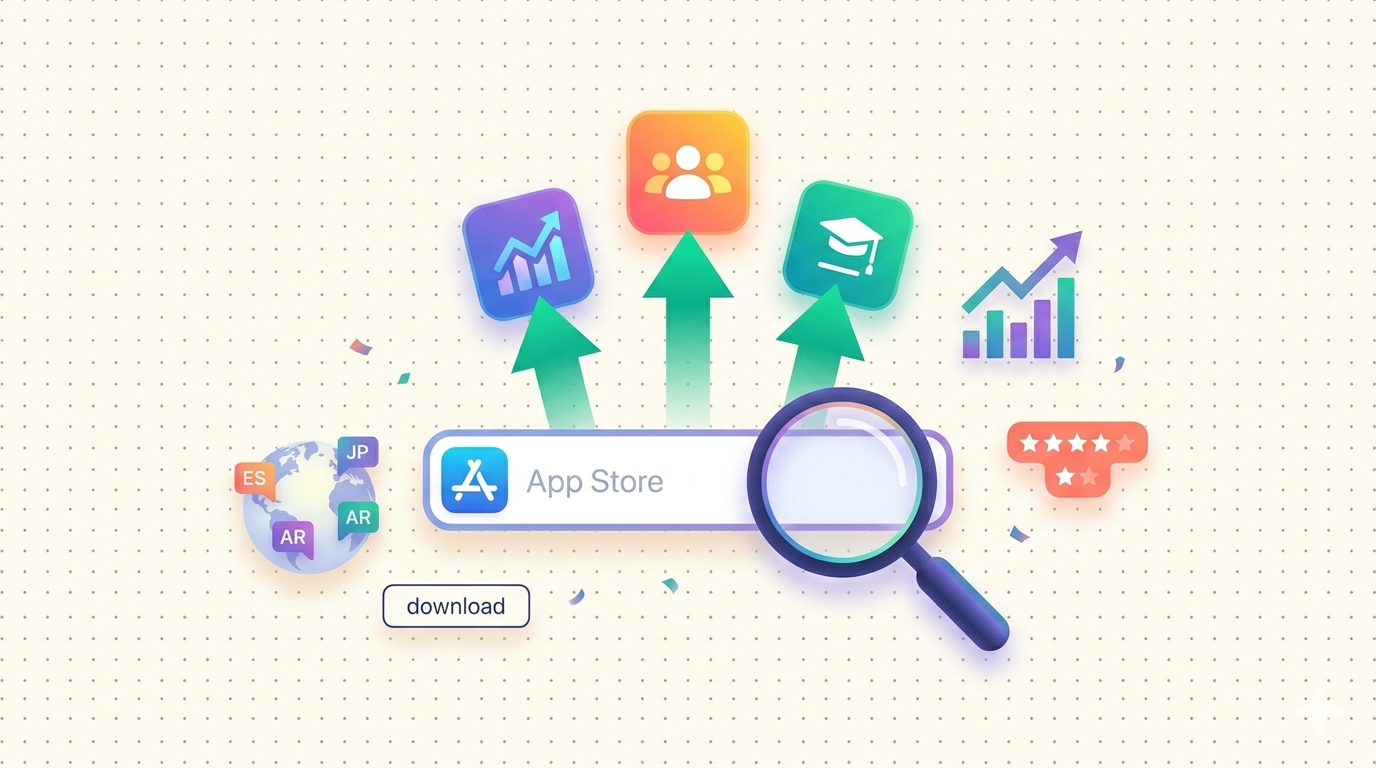
If you have ever wondered what is ASO and why every mobile growth team keeps talking about it, this guide is for you. ASO stands for App Store Optimization, and in 2026 it has quietly become the single most cost-effective way to acquire users for a mobile app. With more than 5 million apps competing for attention across the App Store and Google Play, getting found is no longer optional.
This pillar post walks through the definition, the ranking factors, the differences between platforms, and a practical playbook you can start using this week. By the end, you will know exactly how to evaluate, plan, and ship an ASO strategy that compounds over time.
What is ASO? A Simple Definition
ASO (App Store Optimization) is the process of improving an app's visibility and conversion rate inside mobile app stores like the Apple App Store and Google Play. The goal is to rank higher for relevant search queries and to convert more of those store visitors into installs.
Think of ASO as SEO's mobile cousin. Where SEO targets Google Search, ASO targets the search and discovery surfaces inside app stores. The mechanics are different, the ranking signals are different, and the user intent is much closer to a purchase decision.
A complete ASO strategy covers three layers: textual metadata (title, subtitle, keywords, description), visual assets (icon, screenshots, preview videos), and performance signals (downloads, ratings, retention, and reviews). Strong apps optimize all three at once.
Why App Store Optimization Matters More Than Ever in 2026
Paid user acquisition costs have climbed every year since the iOS 14.5 privacy changes. Average cost per install on iOS now sits well above 5 dollars in many western markets, and even higher for finance and dating verticals. ASO, by contrast, is owned media. Once you rank, the traffic keeps flowing without paying per click.
Organic search is also where most installs still come from. Apple has reported that roughly 65 percent of App Store downloads happen after a search, and Google has shared similar numbers for the Play Store. If you ignore app store optimization, you are leaving the majority of your potential users untouched.
Three trends make ASO even more important in 2026:
- AI-driven discovery. Both stores are leaning harder on machine learning to personalize search and Today tab recommendations. Clean metadata and high conversion rates feed those models.
- Custom Product Pages and Store Listing Experiments. You can now test different screenshots and value propositions per audience without shipping a new build.
- Localization at scale. Apps that localize properly grow installs by 25 to 40 percent in non-English markets. Tools have made this dramatically cheaper than it was even two years ago.
How ASO Actually Works
Both stores run a ranking algorithm that takes a search query and returns an ordered list of apps. The algorithm scores each candidate app on relevance (does the metadata match the query?) and authority (is this app good enough to recommend?).
Relevance is largely about words. The App Store reads your title, subtitle, and keyword field. Google Play indexes your full long description and short description. Match the right phrases, and you become eligible to rank.
Authority is about behavior. Apps with high install velocity, strong ratings, low uninstall rates, and engaged users get promoted. This is why a beautiful listing alone is not enough. The store wants to recommend products users will keep.
Conversion rate ties it all together. If 100 people see your listing and 35 install, you have a 35 percent conversion rate. Higher conversion means the store earns more revenue per impression, so the algorithm shows your app to even more people. This is the flywheel ASO unlocks.
The Key ASO Ranking Factors
Not every signal matters equally, and the weighting differs between Apple and Google. The table below summarizes the main ranking factors and their relative impact on each store.
| Factor | App Store (iOS) | Google Play (Android) | Impact on rankings |
|---|---|---|---|
| App name / title | 30 characters indexed | 30 characters indexed | Very high |
| Subtitle / short description | 30 characters indexed | 80 characters indexed | High |
| Keyword field | 100 characters, hidden | Not used | High on iOS |
| Long description | Not indexed for search | 4000 characters indexed | High on Android |
| Ratings and reviews | Strong factor | Strong factor | High |
| Install velocity | Yes | Yes | High |
| Retention and engagement | Yes | Yes | Medium to high |
| Icon, screenshots, video | Conversion only | Conversion only | Indirect but huge |
On-metadata factors (title, subtitle, keywords, description)
These are the words you write in App Store Connect or Google Play Console. They are the foundation of relevance. Use them to cover your most important keywords without stuffing or repeating phrases. Our guide on ASO keyword optimization walks through how to research and pick these terms.
Off-metadata factors (downloads, ratings, reviews, retention)
You cannot edit these directly, but you can influence them. Smart in-app review prompts, fast bug fixes, and a focus on day 7 retention all push these signals in the right direction. A 4.6-star app with 10,000 reviews will almost always outrank a 4.2-star app with 1,000 reviews for the same query.
Visual factors (icon, screenshots, preview video)
Visuals do not directly change your search ranking, but they decide whether someone taps install after they find you. A polished icon and clear screenshots can lift conversion by 20 to 30 percent, which feeds back into install velocity and rankings. See our breakdown of screenshots that convert for proven layouts.
ASO vs SEO: What's the Difference?
People often ask whether ASO is just SEO for apps. The answer is yes and no. The intent is similar, but the playing field is very different.
| Dimension | SEO (Google Search) | ASO (App Stores) |
|---|---|---|
| Index size | Hundreds of billions of pages | Around 5 million apps |
| Primary unit | Web page | App listing |
| Keyword research source | Google Keyword Planner, Ahrefs | Apple Search Ads, Google Play autosuggest |
| Conversion event | Click to website | Tap install |
| Off-page signal | Backlinks | Installs, ratings, retention |
| Iteration speed | Hours | Days, due to store review |
The biggest practical difference is the smaller universe in app stores. With only a few million apps total, ranking on page one is more achievable than ranking on Google for a competitive query, especially for niche categories.
How to Get Started with ASO
You do not need a giant team to do ASO well. Most of the impact comes from doing four things consistently.
Keyword research
Start by listing every word a user might type to find your app. Then check search volume and difficulty using Apple Search Ads suggestions or a tool like Sensor Tower. Aim for terms with real volume and reasonable competition. You can experiment with our free ASO tools to brainstorm and validate keywords without paying for a full subscription.
Optimize your screenshots
Your first three screenshots do most of the conversion work. Lead with your strongest value proposition, use bold caption text, and keep visuals consistent across the gallery. New publishers often ask how many screenshots they should upload, and the short answer is at least 6 to 8 to fill the carousel and tell a complete story.
Localization
Localizing your listing into 5 to 10 languages can unlock entirely new markets. Translation alone is not enough. You also need localized keywords, screenshots, and cultural references. Our localization hub covers what to translate first and how to prioritize markets by potential ROI.
Track and iterate
ASO is a loop, not a one-time launch. Watch your impression-to-install ratio every week. When a screenshot variant wins, ship the change. When a keyword starts trending, update your metadata. Small weekly improvements compound into significant gains over a year.
ASO Mistakes to Avoid
Most apps lose more from common mistakes than they gain from clever tactics. Watch out for these.
- Keyword stuffing. Repeating the same word in title, subtitle, and description does not help and can look spammy to users.
- Generic screenshots. Bare device frames with no captions waste your most valuable real estate. Read our list of screenshot mistakes to avoid to skip the obvious traps.
- Ignoring reviews. Unanswered one-star reviews quietly drag down your rating. Reply, fix, and ask happy users for feedback.
- Launching once and walking away. Stores reward freshness. Apps that update their metadata and creative every month tend to outperform those that do not.
- Skipping localization. English-only listings cap your growth at maybe 30 percent of the global market.
Frequently Asked Questions
How long does ASO take to show results?
Metadata changes can move rankings within 24 to 72 hours. Bigger gains from improved ratings, retention, and conversion usually take 4 to 8 weeks to compound. Treat ASO as a quarterly discipline, not a one-week sprint.
Is ASO free?
The work itself is free. You can do strong ASO with no budget if you have time to research and iterate. Paid tools speed things up, and tests like Custom Product Pages can require some traffic to reach significance, but the core practice is accessible to indie developers.
What's the difference between ASO and Apple Search Ads?
ASO is organic. Apple Search Ads is paid. They are complementary. Search Ads data, especially Search Match impressions, is one of the best free sources of keyword research for organic ASO.
Do I need different ASO strategies for iOS and Android?
Yes. Apple uses a dedicated keyword field, while Google indexes your full description. Visual and performance optimization is similar, but text strategy differs significantly. Build two separate plans rather than copying one across stores.
The Tools That Make ASO Easier
You can do ASO with a spreadsheet and patience, but a few categories of tools save real time. Keyword research platforms surface volume and difficulty. Screenshot builders like Shotlingo turn raw mockups into store-ready visuals across every device size and language. Analytics suites track your rank and conversion over time.
If you are weighing options, our comparison of Shotlingo vs AppLaunchpad covers how the leading screenshot tools differ on speed, localization support, and template quality.
For deeper reference material, Apple's official App Store product page documentation and Google's Play Console listing guide are both worth bookmarking. Industry data from data.ai insights is also a good source for benchmarking your performance against your category.
Putting It All Together
If you remember one thing from this post, let it be this. ASO is a compounding asset, not a one-off project. Every keyword you research, every screenshot you test, and every review you earn makes the next install slightly cheaper. Teams that treat ASO as a weekly habit tend to outgrow teams that treat it as a launch checklist.
Start with keyword research. Improve your screenshots. Localize for two or three target markets. Watch your conversion rate. Repeat next month. That simple loop, run patiently, is what separates apps that quietly disappear from apps that climb the charts.
Ready to ship better screenshots in every language?
Shotlingo helps you design, localize, and update App Store and Google Play screenshots in minutes instead of days. You get device-perfect mockups, AI translations, and templates designed by performance marketers.
Try Shotlingo free and put what you learned about app store optimization into practice today.